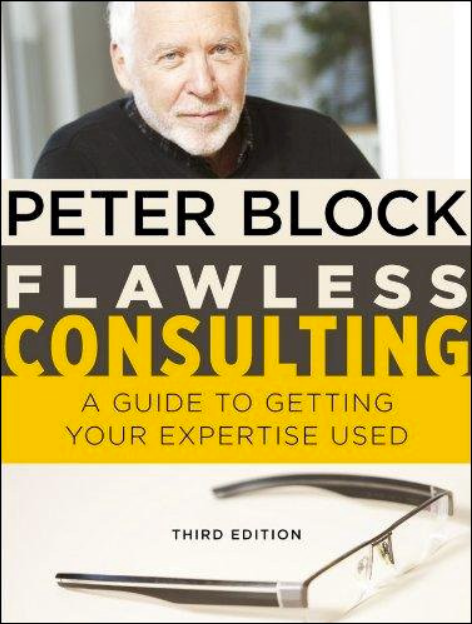
I learned about the book Flawless Consulting, by Peter Block (click here), from my mentor Ed Kless (click here).
Too often we technology consultants get hung-up on the technical stuff, losing sight of the “soft skills” that make a “great” consultant stand out from a “good” consultant.
Peter Block approaches consulting from a “consulting” angle, not a “technical” angle, and delivers a flurry of insightful commentary that can be hugely beneficial to Acumatica consultants if taken to heart.
This is one of those books that I plan to re-read multiple times over the years because it’s one thing to acquire the knowledge, but quite another thing to put it into practice.
Flawless Consulting, by Peter Block (click here)
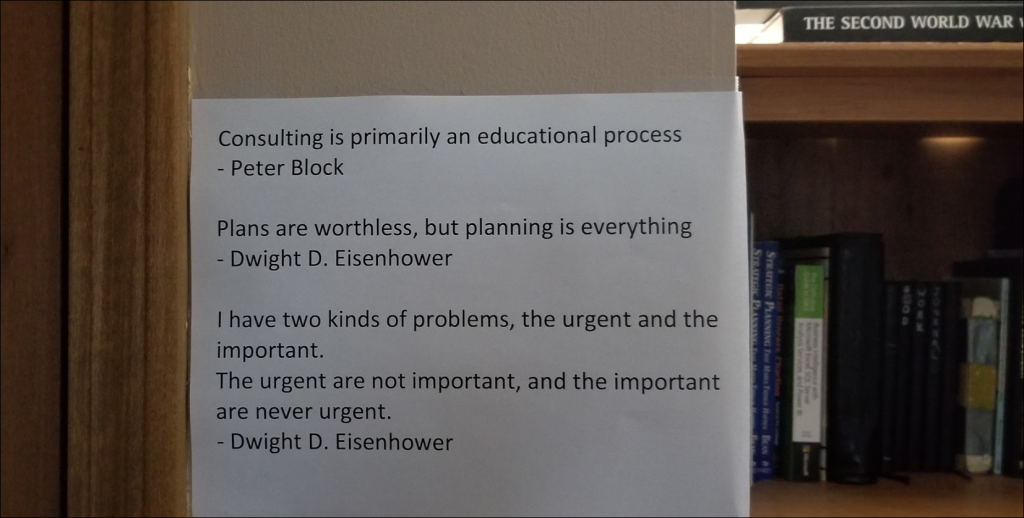
Currently, my favorite quote from the book, “Consulting is primarily an educational process”, is hanging on the wall in my office next to my other two favorite work-related quotes:
Here are my highlights from Flawless Consulting, by Peter Block:
“Authentic consultant” is not an oxymoron but a compelling competitive advantage, if, unfortunately, a rare one.”
———————————————————————-
“In its most general use, consultation describes any action you take with a system of which you are not a part.”
———————————————————————-
“One reason consulting can be frustrating is that you are continually managing lateral relationships.”
———————————————————————-
“Successful consulting demands more than a methodical, step-by-step application of technical expertise.”
———————————————————————-
“Client commitment is the key to consultant leverage and impact. We can’t order the client to take action.”
———————————————————————-
“Effective Implementation Requires Internal Commitment”
———————————————————————-
“Waiting until the implementation phase to overcome resistance is too late.”
———————————————————————-
“The point of maximum leverage for consultants is probably during the contracting phase of the project.”
———————————————————————-
“The core transaction of any consulting contract is the transfer of expertise from the consultant to the client.”
———————————————————————-
“The point of maximum leverage for consultants is probably during the contracting phase of the project.”
———————————————————————-
“The core transaction of any consulting contract is the transfer of expertise from the consultant to the client.”
———————————————————————-
“Your task as the consultant is to name the layers of the problem clearly and simply.”
———————————————————————-
“Too often we see our role in discovery as a passive one.”
———————————————————————-
“Trust is built by dealing with the difficult issues early and publicly.”
———————————————————————-
“The goal is to solve problems so they stay solved.”
———————————————————————-
“Because of our desire to get a project going, most of us have a tendency to overlook and downplay early resistance.”
———————————————————————-
“The more the consultative process can be collaborative, the better the odds for success are after the consultant has left.”
———————————————————————-
“Authentic behavior with a client means you put into words what you are experiencing with the client as you work.”
———————————————————————-
“Authentic behavior also has the advantage of being incredibly simple.”
———————————————————————-
“The nonauthentic consultant responses deal indirectly and impersonally with the resistance.”
———————————————————————-
“When we bend over in the beginning, the client sees us as someone who works in a bent-over position.”
———————————————————————-
“No action by a consultant will guarantee results with a client.”
———————————————————————-
“Two basic elements that apply to consulting relationships: mutual consent and valid consideration.”
———————————————————————-
“Consultants generally want to try something different. You have a right to ask for this opportunity directly.”
———————————————————————-
“Say no or postpone a project that in your judgment has less than a 50/50 chance of success.”
———————————————————————-
“The hard time we have is not really with the action itself, but with valuing the importance of these actions.”
———————————————————————-
“When the contracting meeting is not going well, discuss directly with the client why it is not.”
———————————————————————-
“Every business or technical problem has a component where the way the problem is being managed is part of the problem.”
———————————————————————-
“Access to people and information are the key wants of the consultant.”
———————————————————————-
“It is always easier to cancel a meeting than to set one up at the last minute.”
———————————————————————-
“When you meet with the client to begin contracting, the key question is: Who is the client?”
———————————————————————-
“Write down contracts when you can. Most are broken out of neglect, not intent.”
———————————————————————-
“Not that you know the solution right now. Your expertise is knowing the steps that have to be followed to find a solution.”
———————————————————————-
“In communicating your understanding of the problem, it helps to use short, simple sentences.”
———————————————————————-
“An unsuccessful project is worse than no project at all.”
———————————————————————-
“There is a difference between what the client wants from the project and what the client wants from you.”
———————————————————————-
“Giving up control is a major cause of organizational uneasiness.”
———————————————————————-
“No social contract will last forever; in fact, the contract usually is renegotiated often during the life of the project.”
———————————————————————-
“If you were making progress and moving toward agreement, your energy would be increasing.”
———————————————————————-
“You want to get a single message from the client so you know where things stand.”
———————————————————————-
“Despite their importance to you, all projects were not meant to be. It is vital to accept this now, early in the project.”
———————————————————————-
“Saying no says that we have limits, that we have a right to declare boundaries and decide on our own what we commit to.”
———————————————————————-
“It is in your and the client’s best interests to refuse projects that do not have a reasonable chance for success.”
———————————————————————-
“Charisma and presence are in fact two mythical virtues that are highly overrated.”
———————————————————————-
“The more authentic I am, the more the client trusts me and the more quickly the resistance disappears.”
———————————————————————-
“What obstacles are in the way of the client’s trusting in what I offer?”
———————————————————————-
“Consulting is primarily an educational process.”
———————————————————————-
“Ask how you and the client will know whether you are successful.”
———————————————————————-
“The clearer you are about your process, the more you help reduce client fears about loss of control and vulnerability.”
———————————————————————-
“Managers probably learn more from watching consultants than from listening to them.”
———————————————————————-
“The contracting meeting is a leading indicator of how the rest of the project is going to go.”
———————————————————————-
“Don’t spend so much time figuring the problem out. You will have the whole consultation to do that.”
———————————————————————-
“It is technology. It is not a substitute for relatedness, authenticity, meaning, or being of service in the world.”
———————————————————————-
“The hard cultural sell about the magic of technology creates an exaggeration of value.”
———————————————————————-
“The big advantages of the virtual world are entertainment, speed, and cost.”
———————————————————————-
“All that we do electronically requires more care and attention than if we were in the room together.”
———————————————————————-
“One major limitation of virtual technology in the consulting process is that most of my senses are made obsolete.”
———————————————————————-
“E-mail is great for the logistical side of life, but risky for the relationship side.”
———————————————————————-
“Just because you do not have the final decision is not a reason to avoid questioning the project.”
———————————————————————-
“Efficiency Has Hidden Costs.”
———————————————————————-
“Resistance doesn’t always happen, but when it does, it is puzzling and frustrating.”
———————————————————————-
“View resistance as a natural process and a sign that you are on target.”
———————————————————————-
“Resistance … is a reaction to an emotional process taking place within the client.”
———————————————————————-
“If the reservations don’t get expressed to you, they will come out somewhere else, perhaps in a more destructive way.”
———————————————————————-
“If you think a meeting went smoothly because the manager didn’t raise any objections, don’t trust it.”
———————————————————————-
“Silence never means consent.”
———————————————————————-
“Resistant clients are defending against the fact that they are going to have to make a difficult choice.”
———————————————————————-
“The main thing to do in coping successfully with resistance is to not take it personally.”
———————————————————————-
“The desire for solutions can prevent the client from learning anything important about the nature of the problem.”
———————————————————————-
“Most very technical or business-related problems are in some way caused or maintained by how that problem is being managed.”
———————————————————————-
“Politics is the exercise of power. Organizations operate like political systems, except there is no voting.”
———————————————————————-
“When you get resistance, it may be that you are unintentionally disturbing whatever political equilibrium has been established.”
———————————————————————-
“No technical solutions will suffice if the manager has no energy to try it.”
———————————————————————-
“People entering therapy want confirmation, not change.”
———————————————————————-
“Resistance is an emotional process, not a rational or intellectual one.”
———————————————————————-
“The wish of systems to remain predictable (don’t surprise me) is a defense that consultants have to deal with continually.”
———————————————————————-
“The rewards in doing consulting need to be in the project as we are doing it now.”
———————————————————————-
“The need for a heroic self-image is another myth about consulting that ought to be laid to rest.”
———————————————————————-
“This heroic impulse in the consultant is the consultant’s own resistance against facing the realities of a difficult project.”
———————————————————————-
“Heroes have a hard life… Most heroes… get paid just about what you are making right now.”
———————————————————————-
“The most effective way to encourage the client to be authentic is for the consultant to also behave authentically.”
———————————————————————-
“Most questions are statements in disguise.”
———————————————————————-
“A sure cue that you are encountering resistance is that you hear the same idea explained to you for the third time.”
———————————————————————-
“Don’t keep talking. Live with the tension. Make the statement about resistance and remain silent.”
———————————————————————-
“Most questions are statements in disguise.”
———————————————————————-
“Dealing with resistance is harder than actually doing data collection.”
———————————————————————-
“Are we here to solve a problem or create a new future for ourselves?”
———————————————————————-
“We want to go to a doctor, get a prescription, swallow a pill, and get on with our life.”
———————————————————————-
“If we give clients precisely what they ask for, we run the risk of not having served them well.”
———————————————————————-
“Often we are dealing with human systems, and human systems are not amenable to technical solutions.”
———————————————————————-
“There are no purely technical problems.”
———————————————————————-
“As a consultant, I never accept the presenting problem as the real problem without doing my own discovery and analysis.”
———————————————————————-
“Your goal in each consultation is to catalyze action, not just to have an accurate assessment.”
———————————————————————-
“Emphasis on reason, which provides solid ground for us to stand on, can have trouble engaging people’s hearts and spirits.”
———————————————————————-
“Move beyond authority and to the challenge of working through relationships, example and influence.”
———————————————————————-
“The purpose of the analysis is to focus energy, not describe the universe.”
———————————————————————-
“If you want to be of unique value to your client, then you have to take the risk of offering unique information.”
———————————————————————-
“To accept the presenting problem at face value is to get stuck. The same usually goes for the client’s first portrayal of gifts or possibilities. There is more than meets the eye.”
———————————————————————-
“The consultant’s energy is directed toward continually uncovering issues for which people can take responsibility.”
———————————————————————-
“Resist being too carried away by the struggle to develop perfect recommendations.”
———————————————————————-
“The consultant’s primary task is to present a fresh picture of what has been discovered. This is 70 percent of the contribution you have to make. Trust it.”
———————————————————————-
“I have faith that what I can remember is what is really important.”
———————————————————————-
“Helping the manager face up to the impact difficult relationships have on the problem may be the most important contribution you can make.”
———————————————————————-
“Don’t project our feelings and sensitivities onto the client. Make direct statements, and then ask how the client feels about the statements.”
———————————————————————-
“If you avoid information that creates tension, then why does the client need you as a consultant? The client already knows how to avoid tension.”
———————————————————————-
“In wording feedback, then, your goal is to describe what you have found and not to evaluate it… The more the feedback is evaluative, the greater the resistance there will be.”
———————————————————————-
“Resist the temptation to explain the unexplainable. The picture you present is a statement of what is, not a statement of what ought to be.”
———————————————————————-
“In any conversation about what is occurring, you’re doing two things: both giving support to the organization and confronting it… Support and confrontation are not mutually exclusive.”
———————————————————————-
“The mistake with most presentations is that they are too long and too intricate… Go ahead and fall in love with your data – but don’t tell everyone about it. Keep your presentation short and simple.”
———————————————————————-
“Most feedback overloads the organization. Keep the feedback down to under ten, or even fewer, issues.”
———————————————————————-
“You don’t have to announce that you are in charge; you just have to act that way.”
———————————————————————-
“My preference is to avoid a lot of formality. A formal presentation, especially using PowerPoint, puts too much distance between the client and the information.”
———————————————————————-
“How the client reacts to the data is more important to implementation than the data itself.”
———————————————————————-
“A certain amount of tension is useful in any meeting. If there is no tension, then it is likely that the issues and recommendations are ones that nobody really cares about, which means there also won’t be any energy to implement.”
———————————————————————-
“The most powerful thing you can do is to ask clients, at the halfway point in meetings, whether they are getting what they want from the meeting.”
———————————————————————-
“As a consultant, you can focus on the sensitive issues without vested interest and perform a service by doing this.”
———————————————————————-
“The crucial skill in conducting any meeting is to stay focused on the here-and-now process.”
———————————————————————-
“You should move toward the resistance rather than away from it.”
———————————————————————-
“You’re much more likely to get to the heart of the problems around responsibility and commitment and owning up to problems if you react and present your own feelings as the discussion is going on.”
———————————————————————-
“There is always going to be some segment of the group that is going to feel tremendous anxiety and resist… The ground rule is not to overinvest in the resistant people.”
———————————————————————-
“Knowing what to do (the product of the discovery phase) and finding the right way to do it (the focus of implementation) are two different worlds.”
———————————————————————-
“We tend to oversimplify what it takes to act on what we know to be true.”
———————————————————————-
“Part of what makes implementation difficult is that we often treat change as if it can be installed, managed, and engineered.”
———————————————————————-
“Change cannot be installed and engineered, and so it always takes longer and is more difficult than we ever imagined.”
———————————————————————-
“The engineer in us needs to be complemented with the thinking of the social architect and the skills of a community organizer.”
———————————————————————-
“An essential aspect of implementation: bringing people together to create and plan how to make something work.”
———————————————————————-
“We think that when the boss’s mind is made up, action will follow. This is rarely the case. No single person runs a business, no one person makes or delivers a product, and no one general ever fought a war.”
———————————————————————-
“Change in human systems, even in a monarchy, has much more to do with the consent of the governed than the will and ability of those who govern.”
———————————————————————-
“To have high expectations of others is to have faith in them. It is an expression of optimism and hope in the capacities of another.”
———————————————————————-
“We are not here to fix people. Our task is to stay focused on the gifts and capacities of people in the room and what they can do about their own actions.”
———————————————————————-
“One more way we interfere with implementation is through our attitude about measurement. We have turned it into a god… No argument with the need for measurement; it’s the question of how central it should become and who should provide it.”
———————————————————————-
“The belief that if we cannot measure something, it does not exist treats the human system as if it were a mechanical one. The belief that people will do only what they are measured against is a cynical view of the human condition.”
———————————————————————-
“When we attribute to measurement the capacity to create the behavior we want, we have moved into a simple cause-and-effect relationship and hold on to the belief that implementation and change can be engineered.”
———————————————————————-
“While there are useful tools for measuring, they need to be under the control of those doing the work and need to be kept in perspective as simply one part of making change.”
———————————————————————-
“Implementation of any change boils down to whether people at several levels are going to take responsibility for the success of the change and the institution.”
———————————————————————-
“The nature, tone, and structure of how we come together is the sampling device people use to determine the credibility of the strategy.”
———————————————————————-
“Don’t protect people from bad news in the name of protecting them from anxiety. Anxiety is the natural state, best handled in the light of day. The only caution is to keep it short and informal, with more from the heart than from the head.”
———————————————————————-
“As participants, we go to meetings expecting something to happen to us. We are programmed for entertainment and wonder how good a meeting they are going to run.”
———————————————————————-
“As straightforward as the concept is, most of the times when we come together, we put great energy on presentation and attend to participation as an afterthought.”
———————————————————————-
“Freedom of speech and the right to assembly are constitutional guarantees. What is true for the streets, however, is less true for the offices and meeting rooms of our institutions.”
———————————————————————-
“Until we can speak in public, our sense of what is real—our doubts and reservations and our past disappointments—we are unable to invest in a different future. If we cannot say no, our yes has no meaning.”
———————————————————————-
“If honest conversation stays private, the public conversations will be unreal and ultimately discouraging.”
———————————————————————-
“The redistribution of power and accountability happens when honest, confronting conversations take place in public settings.”
———————————————————————-
“If doubt and even cynicism cannot be publicly expressed, then internal commitment cannot be offered freely.”
———————————————————————-
“In creating high engagement, it is the expression of doubt that counts, not its resolution. We cannot construct a plan that eliminates all doubts, but we can always acknowledge them. We can acknowledge cynicism and make room for it without being paralyzed by it.”
———————————————————————-
“The truth spoken in public is a rare commodity in most institutions. The success of an implementation strategy will depend on the quality of the conversation that begins it.”
———————————————————————-
“The real cost of our habitual conversations is the cynicism they breed. It’s not that the questions they raise have not been answered. Rather, it is the staleness of the discussion that drains energy. Old conversations become a refuge, a way for us to find safety.”
———————————————————————-
“If changing the conversation does nothing else, it gives hope that each time we come together, we have the capacity to transform our experience.”
———————————————————————-
“There are two conditions of accountability that support high-commitment implementation strategies. The first is that we need to be accountable to our peers first and our boss next . The second is that we need to commit without negotiation or barter.”
———————————————————————-
“Parents can give orders and administer consequences, but at the end of the day, the children decide when to clean their room or put the dishes away. We work hard at managing, and at times manipulating, those who have power over us.”
———————————————————————-
“When our bosses are upset with us, we have learned how to say, “Thank you for the feedback,” as a way of defending against their disappointment and not really having to change.”
———————————————————————-
“Peers are the ones we are functionally accountable to, no matter who conducts our performance review.”
———————————————————————-
“There is a need to bring closure to each meeting that acknowledges the effort and care brought into the room. One good way to finish is to focus on the gifts and value each participant brought to the proceedings.”
———————————————————————-
“If we do not put the question of success on the table, then we will get stuck with the default position of student as consumer if they do well, identified patient if they do not. Too often we talk of students as someone to cure, fix, heal, or filled with information.”
———————————————————————-
“Despite our shyness and the discomfort we feel in talking about gifts, successful implementation comes more quickly from capitalizing on our strengths.”
———————————————————————-
“People choose to commit to a decision based on emotion, feelings, intuition, trust, and hope. These become the playing field for change.”
———————————————————————-
“If negative feedback were so useful, we would have it together by now, and we don’t. The primary impact of focusing on weaknesses is that it breeds self-doubt and makes us easier to control. That is why it is so compelling and popular.”
———————————————————————-
“The decision to support change is not just based on logic and reason; we need to help our clients deal with attitudes and feelings as well.”
———————————————————————-
“Results are achieved when members of a system collectively choose to move in a certain direction.”
———————————————————————-
“Leadership behavior is not as vital as membership behavior. It is difficult for a patriarchal society such as ours to accept this reality.”
———————————————————————-
“The choice we give people is critical and argues against our wish to package the future. Effective implementation most often entails the redistribution of power.”
———————————————————————-
“What if we shifted the stance of teacher as knower to teacher as learner?”
———————————————————————-
“What if I stopped thinking of myself as a teacher and started thinking of myself as a consultant to learning?”
———————————————————————-
“Consultative teachers engage the three skills every consultant needs to get the job done: technical skills, interpersonal skills, and consulting skills.”
———————————————————————-
“Resistance is a sign that something important is going on. It is not a problem to be solved or overcome.”
———————————————————————-
“Successful learning is random discovery.”
———————————————————————-
“If the goal is learning, “failure” is a big way it happens.”
———————————————————————-
“What is the cost of not knowing? Usually it is shame on the part of the student.”
———————————————————————-
“Too often we talk of students as someone to cure, fix, heal, or filled with information.”
———————————————————————-
“Most learning comes from speaking and doing. Yet we ask students to spend a lot of time listening and reading.”
———————————————————————-
“One of the major shifts that occurs when we move from being teachers to becoming learning consultants is in our own perspective on where choice resides.”
———————————————————————-
“Consulting is primarily a relationship business.”
———————————————————————-
“The success of the work will hinge on the quality of the relationships we have with our clients. This relationship is the conduit through which our expertise passes.”
———————————————————————-
“Consulting cannot be done well without genuine caring for the client.”
———————————————————————-
“In a sense, our job is to be a learning architect.”
———————————————————————-
“Most traditional educational or consulting efforts are more about teaching than learning.”
———————————————————————-
“Clients are so conditioned to be passive in the teaching-and-learning process that given the choice to manage their own learning, they will pass and turn the floor back to the consultant.”
———————————————————————-
“Too often the consultant is the one who learns the most.”
———————————————————————-
“In most training and instruction, there is a great deal of teaching and very little learning.”
———————————————————————-
“It is in the struggle to create that we find value. It is in the effort to understand and create ideas and practices that the learning resides.”
———————————————————————-
“We need to design our efforts to support learning at the expense of teaching.”
———————————————————————-
“If learning and change are truly our intent, a slower, more demanding, and more deliberative approach is required.”
———————————————————————-
“The struggle is the solution. Most persistent problems that call for consultation have no clear right answer.”
———————————————————————-
“Will more technology and better information help, or is the problem one of motivation and lack of training?”
———————————————————————-
“We have to learn to trust the questions—and recognize that the way we ask the question drives the kind of answer we develop.”
———————————————————————-
“We get stuck by asking the wrong question. The most common wrong question is that of the engineer in each of us who wants to know how we get something done.”
———————————————————————-
“Blueprints with milestones are the drug, and more discipline is the prescription that never cures.”
———————————————————————-
“Alan Watts once said that we have reached the point at which we go to a restaurant and eat the menu. We have become more interested in the definition and measurement of life than in living it.”
———————————————————————-
“‘How’ questions will take us no further than our starting place. They result in trying harder at what we were already doing.”
———————————————————————-
“To move a living system, we need to question what we are doing and why. We need to choose depth over speed, consciousness over action—at least for a little while.”
———————————————————————-
“What would happen if we did nothing? When is change for its own sake? Maybe we should just get better at what we do now.”
———————————————————————-
“The why questions are designed for learning and change, and in that way they are very practical indeed.”
———————————————————————-
“Many of my mistakes have occurred when I became anxious about the process and reverted to the safe harbor of action plans and lists.”
———————————————————————-
“Once the actions were listed, we all breathed a sigh of relief and smiled at the familiar feel of milestones in our hands.”
———————————————————————-
“If I had persisted with the difficult questions longer, asked for more rethinking of the basics, I would have served the client better.”
———————————————————————-
“We are often faced with tension that is historical and tenacious. Everyone feels it, but no one wants to name it.”
———————————————————————-
“The tension that was expressed in the desire to get to an action plan was really a defense against the deeper conversation about ways they were apart and the caution they felt in yielding positions that would be required for significant movement to occur.”
———————————————————————-
“The door to new ways of thinking does not open easily, and it is the tension in the room that actually becomes the key.”
———————————————————————-
“Discussing the tension makes insight and resolution possible. If we can see the tension as energy and go toward it, big insights will follow.”
———————————————————————-
“When the tension surfaces, it needs to be named, discussed, and acknowledged. The consultant has to push the discussion into the difficult areas.”
———————————————————————-
“It is the patriarchal culture that wants to keep a lid on feelings,”
———————————————————————-
“The key is understanding that the expression itself is what is valuable, not the answer or resolution.”
———————————————————————-
“I once thought that my service as a consultant was to identify problems.”
———————————————————————-
“After capitalizing on weaknesses for years, I have changed my focus to seeing what gifts are there and where capacities lie.”
———————————————————————-
“Focusing on deficiencies or needs only reinforces the power of the expert at the expense of the client or employee.”
———————————————————————-
“Are we here to remind each other of what is missing or of what is possible?”
———————————————————————-
“If what you see is what you get, then look for the strength, and you will find it.”
———————————————————————-
“When we look at what is missing in other people or other organizations, we put them in a lesser position,”
———————————————————————-
“We are responsible for one another’s learning.”
———————————————————————-
“In our first exposure to institutional life, at school, our success came at the expense of others.”
———————————————————————-
“It always surprises me when I hear managers speak for the well-being of the whole and then see them participate in fostering competition among the parts.”
———————————————————————-
“If our goal as consultants is learning and change, we need to act as if all are responsible for it.”
———————————————————————-
“If we want to see change, we had better not wait to leave this session for it to happen. How can we have hope in tomorrow if today is not different? Each moment has to carry within it an element of the destination.”
———————————————————————-
“We can implement the future without having to wait for it. How long does change take? Well, are we ready to begin it at this moment?”
———————————————————————-
“Our action plan is what we do in the next hour. It is not what we say but what we do together.”
———————————————————————-
“Why do we always think that some other group is the problem? Why is it that in all these years of training, I have never had the right group in the room? Whoever is in the room is always the wrong person.”
———————————————————————-
“Victims do not do well in the moment, and we have all been wounded. We create little room in organizational life for forgiveness—of ourselves and others.”
———————————————————————-
“If we have not forgiven the past, we will keep trying to fix it.”
———————————————————————-
“If change is so wonderful, why don’t you go first?”
———————————————————————-
“We colonize each other when we define others as the problem. And the higher in the institution we go, the more we are cut off from our own need to change.”
———————————————————————-
“As consultants, we once thought that as soon as management changed, employees would follow. Not necessarily so. Employees create bosses.”
———————————————————————-
“The world will provide the events that will force movement. Life provides the disturbance. We do not have to induce change, drive it, or guide it. All we have to do is join it.”
———————————————————————-
“The consultant is as much a learner as any client. We in fact are often more changed by our consultation than the client, and this is as it should be.”
———————————————————————-
“The fact that we show up with a briefcase, a résumé, and a conceptual framework is more a function of habit than necessity. It will be enough if we simply show up. This requires an act of faith. And that may be at the heart of the matter.”
———————————————————————-